Emergency Water Removal & Water Extraction in Seneca, SC
When unwanted water is present inside a property, removing standing water is often one of the first restoration priorities. Pro-Kleen Restoration provides water removal and extraction services for homes and businesses in Seneca and surrounding Upstate South Carolina communities. We address accessible water, check surrounding materials for moisture, and transition the property into drying. Call (864) 870-7167 to discuss your situation.
Water Extraction Services Near Seneca
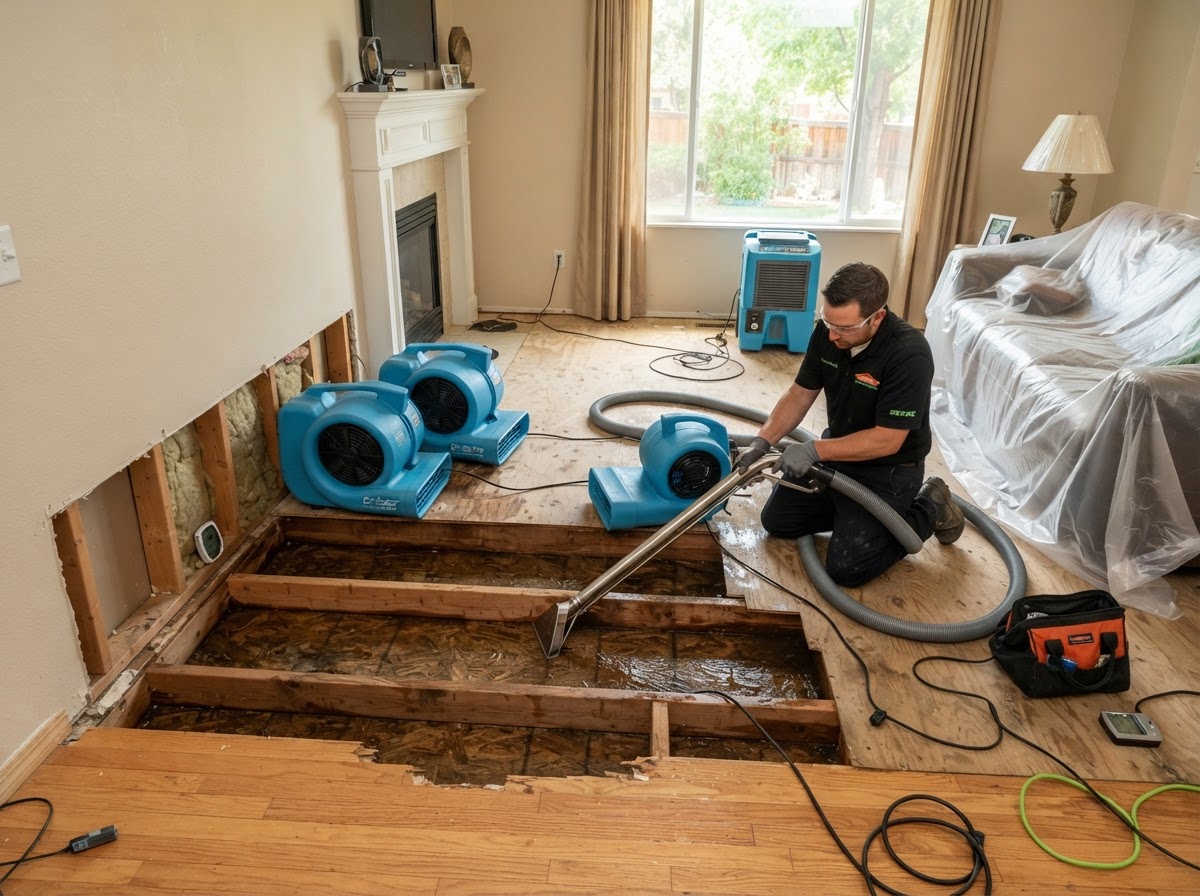
Professional water extraction is the physical removal of standing or excess water from a property using high-suction extraction equipment. It targets the water you can see — pooled water on floors, saturated carpet, and water collected in low areas — and reduces the amount of water available to migrate deeper into building materials.
Extraction is a critical first step, but it is not the same as drying. Removing visible water does not automatically mean a structure is dry. Moisture that has already soaked into subfloors, wicked up drywall, or pooled behind cabinets remains inside the building assembly and must be addressed through structural drying and dehumidification.
After extraction, the property transitions into the drying phase. We check surrounding materials for moisture, position drying equipment where needed, and monitor conditions so the structure returns toward an appropriate dry standard. The goal of water removal in Seneca is to stop progressive saturation quickly and set the stage for complete drying.
Water Removal
Removes the bulk standing water from floors, carpets, and accessible surfaces using extraction wands and pumps. It stops the immediate source of migration but does not dry materials that have already absorbed moisture.
Structural Drying
Evaporates and removes the moisture bound inside subfloors, drywall, framing, and other materials using air movers and dehumidifiers. Drying is what returns the structure to an appropriate dry standard after extraction.
Contact Pro-Kleen Restoration
Speak directly with our Seneca, SC restoration team.
Common Reasons Properties Need Water Removal
Standing water inside a Seneca property can come from many sources. Identifying what introduced the water helps determine the extraction approach and what comes next in the restoration process.
Burst Pipes
A ruptured supply line can release water rapidly across floors and into adjacent rooms before the source is shut off.
Broken Supply Lines
Flexible connectors and braided supply lines can fail, feeding water continuously until the valve is closed.
Water Heater Failures
Tank leaks or drain pan overflows can release large volumes of water into utility rooms and garages.
Washing Machine Overflows
Drain hose backups or inlet valve failures can flood laundry rooms and adjacent living areas.
Dishwasher Leaks
Failed seals or drain blockages allow water to escape beneath cabinets and into subflooring.
Fixture Overflows
Toilet, tub, and shower overflows send water across floors and into nearby cavities.
Roof Leaks
Storm-driven rain enters through roof openings and collects at ceilings and along walls.
Storm Intrusion
Heavy Upstate rainfall can push water through windows, doors, and building envelopes.
Commercial Plumbing Losses
Larger supply line failures in commercial buildings can affect multiple rooms or floors at once.
Where Water Can Migrate After It Enters
What Happens During Water Extraction?
Water extraction is a focused, equipment-driven process. The exact tools and sequence depend on the volume of water, the surfaces involved, and whether contamination is a concern. Not every job uses every piece of equipment.
Evaluate the Affected Areas
We assess where water is present, estimate the volume, and identify safety concerns such as nearby electrical components or potential contamination.
Address Accessible Standing Water
Extraction wands, squeegee wands, and where appropriate submersible pumps remove pooled water from floors and carpets.
Use Extraction Equipment Appropriate to the Loss
Equipment is selected based on surface type — carpet, hard flooring, or saturated materials each require a different approach.
Check Surrounding Materials for Moisture
Moisture meters identify how far water has migrated beyond the visible area, into walls, subfloors, and cavities.
Remove Unsalvageable Material Where Appropriate
Saturated carpet padding or damaged materials that cannot be dried effectively may be removed to allow proper drying of the structure.
Set Drying Equipment When Needed
Air movers and dehumidifiers are positioned to begin evaporating moisture that remains inside building materials.
Begin Dehumidification
Dehumidifiers pull evaporated moisture out of the air so it does not reabsorb into drying materials.
Monitor Drying Conditions as Appropriate
Moisture readings are taken over the drying period to confirm the structure is progressing toward an appropriate dry standard.
Equipment selection varies by loss. Some water removal projects require only extraction wands, while others involve pumps, multiple air movers, and several dehumidifiers. Pro-Kleen Restoration adjusts the setup to the property.
Questions about your property in Seneca?
Call Pro-Kleen Restoration to discuss the damage and what may be needed.
What Happens After Standing Water Is Gone?
A room that looks dry after extraction can still hold significant moisture inside its materials. That is the key difference between water removal and complete water damage restoration. Once the visible water is gone, attention shifts to what remains hidden — moisture inside subfloors, behind walls, under cabinets, and within framing.
After extraction, the property typically moves into structural drying, moisture monitoring, and evaluation of affected materials. Flooring, drywall, and cabinetry are assessed to determine whether they can be dried and restored or whether portions need to be removed. Contents are evaluated, and any odor or mold concerns are addressed as part of the broader restoration process.
Some losses also require cleaning, sanitizing, or reconstruction preparation depending on the water source and extent of damage. Pro-Kleen Restoration serves property owners in Seneca and nearby communities such as Clemson, Walhalla, Westminster, and Anderson, coordinating the transition from extraction through drying and into any needed repairs.
Areas & Materials Commonly Affected
Water Removal & Extraction FAQs
Standing Water Inside Your Property?
Contact Pro-Kleen Restoration to discuss water removal and extraction for your Seneca area property. Call (864) 870-7167 or submit a service request and our team will follow up with you.