Structural Drying & Dehumidification in Seneca, SC
Removing standing water is only one part of restoration. Moisture can remain inside building materials and the indoor air long after visible water has been extracted. Pro-Kleen Restoration provides structural drying and dehumidification for homes and businesses in Seneca — detecting retained moisture, establishing controlled drying, and confirming progress before repair work begins. Call (864) 870-7167 to discuss your property.
Professional Structural Drying Near Seneca
Structural drying is the controlled process of reducing excess moisture in affected building materials and the surrounding environment after water damage. It begins after extraction where necessary and focuses on the moisture that remains trapped inside drywall, framing, subfloors, flooring, cabinetry, insulation, and other assemblies — moisture that a wet vacuum cannot reach.
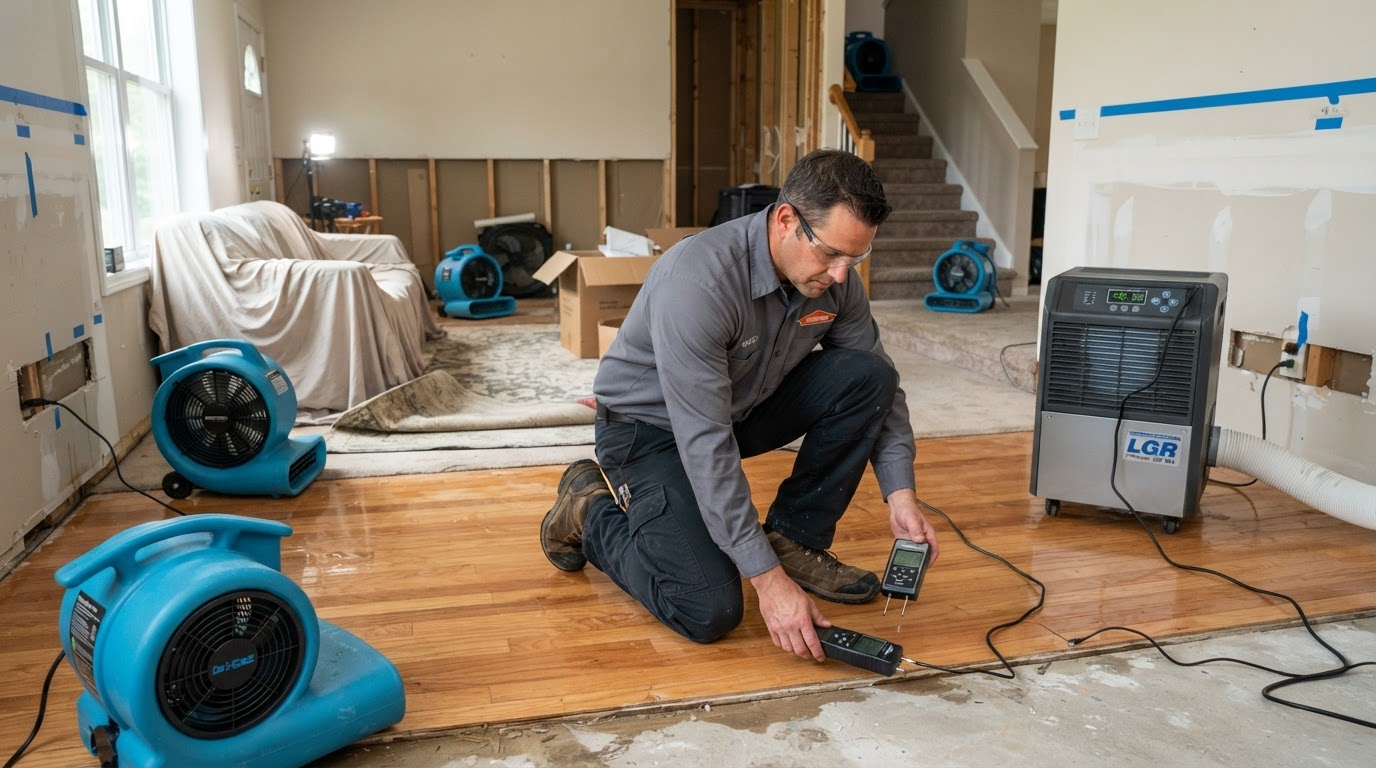
The process relies on moisture detection to establish a baseline, air movement to evaporate trapped moisture out of materials, and dehumidification to pull that released moisture out of the air so it does not reabsorb. Monitoring over the drying period helps confirm that materials are returning toward an appropriate dry standard rather than simply appearing dry at the surface.
Pro-Kleen Restoration provides structural drying and dehumidification for properties in Seneca and surrounding communities such as Clemson, Walhalla, Westminster, and Anderson. We assess the affected materials, establish the drying strategy, and monitor conditions so the property is ready for any needed repairs.
Water Extraction
Extraction removes the standing or excess water you can see — pooled water on floors, in carpets, and on accessible surfaces. It handles the bulk of the water but does not address moisture absorbed into materials.
Structural Drying
Drying addresses the moisture that remains inside building materials and the air after extraction — evaporating it with air movement and removing it with dehumidification until materials return toward an appropriate dry standard.
Contact Pro-Kleen Restoration
Speak directly with our Seneca, SC restoration team.
Where Moisture Can Remain After Water Damage
Different materials absorb and release moisture at different rates, which affects how they are dried and whether they can be restored in place. Understanding where moisture hides helps explain why a room that looks dry can still hold significant water inside its assemblies.
Drywall
Drywall wicks moisture upward from the floor and absorbs it from saturated wall cavities, often staying damp behind an intact surface.
Wood Framing
Framing members hold moisture along their length, transferring water between floors and into adjacent wall cavities.
Subfloors
Subflooring beneath finished flooring can stay saturated even when the surface above appears dry, requiring access to dry properly.
Hardwood Flooring
Hardwood absorbs moisture slowly and releases it slowly, which can cause cupping, crowning, or buckling during drying.
Carpet Assemblies
Carpet and padding hold water against the subfloor, often requiring extraction and airflow through or beneath the assembly.
Cabinetry
Cabinets absorb water through unfinished edges and backs, holding moisture against walls and the floor below.
Insulation
Insulation in walls and ceilings can hold moisture against framing and drywall, slowing drying and reducing effectiveness.
Wall Cavities
Enclosed cavities trap moisture behind intact drywall, sometimes requiring access holes to allow air movement and monitoring.
Crawl-Space Materials
Framing, insulation, and the underside of flooring in crawl spaces can stay damp after surface drying is complete.
Indicators Moisture May Still Be Present
How Structural Drying & Dehumidification Works
Structural drying is a controlled process, not simply pointing fans at a wet floor. The steps below describe a typical sequence, but the equipment and approach are adjusted to the specific materials, water volume, and environmental conditions of each loss.
Evaluate the Water Loss and Affected Materials
We assess which materials are wet, how wet they are, and how far moisture has migrated to establish the drying scope.
Remove Standing Water If Still Present
Any remaining standing water is extracted first, because drying cannot proceed effectively while bulk water remains.
Establish Baseline Moisture Conditions
Moisture meters and thermal imaging where appropriate record starting readings so drying progress can be measured over time.
Position Air Movement Equipment
Air movers are placed to direct airflow across wet surfaces and into cavities, evaporating trapped moisture out of materials.
Use Dehumidification to Manage the Environment
Dehumidifiers pull released moisture out of the air so it does not reabsorb into drying materials, lowering indoor humidity.
Create Access to Trapped Moisture When Needed
Where moisture is sealed behind drywall or under flooring, access holes or selective material removal may be used to allow drying.
Monitor Moisture Conditions
Readings are taken over the drying period to confirm materials are returning toward an appropriate dry standard.
Confirm Drying Before Repair Work
Once materials are adequately dry, the property is prepared for reconstruction or repair as the property owner directs.
There is no universal drying time. Materials, water volume, humidity, airflow, and the extent of damage all affect how long drying takes. Pro-Kleen Restoration does not promise a fixed duration; conditions are monitored and equipment is adjusted as needed.
Questions about your property in Seneca?
Call Pro-Kleen Restoration to discuss the damage and what may be needed.
Why Proper Drying Matters After Water Damage
Inadequate drying creates problems that often appear later rather than immediately. Moisture left inside drywall, framing, subfloors, and insulation can lead to swelling, warping, delamination, odor, and material deterioration. It can also create conditions favorable to microbial growth, which may require a separate remediation effort if discovered after repairs are already complete.
One of the most common mistakes after water damage is closing up walls or replacing flooring before materials are adequately dry. Trapped moisture behind new drywall or under new flooring has nowhere to go, which can lead to recurring odor, material failure, and conditions that favor mold growth. Confirming drying with moisture readings before any repair work begins helps protect the finished repairs.
Pro-Kleen Restoration works with residential homeowners, landlords, property management companies, and commercial property operators across Seneca and surrounding Upstate South Carolina communities. Whether the loss is a single room or a larger water event, the goal is to dry the structure thoroughly so repairs are built on a dry foundation.
Areas & Materials Commonly Affected
Structural Drying & Dehumidification FAQs
Need Professional Structural Drying in Seneca?
Contact Pro-Kleen Restoration to discuss your property and the structural drying and dehumidification work that may be needed. Call (864) 870-7167 or submit a service request and our Seneca team will follow up with you.