Storm Damage Restoration & Emergency Cleanup in Seneca, SC
Severe weather in Upstate South Carolina can cause wind-driven rain, damaged openings, roof-related water entry, fallen debris, and storm-related flooding. Pro-Kleen Restoration helps homeowners, landlords, property managers, and businesses in Seneca assess storm-related property damage, stabilize exposed areas, remove water, dry the structure, and prepare it for repair. Call (864) 870-7167 to discuss your property.
Storm Damage Cleanup Near Seneca
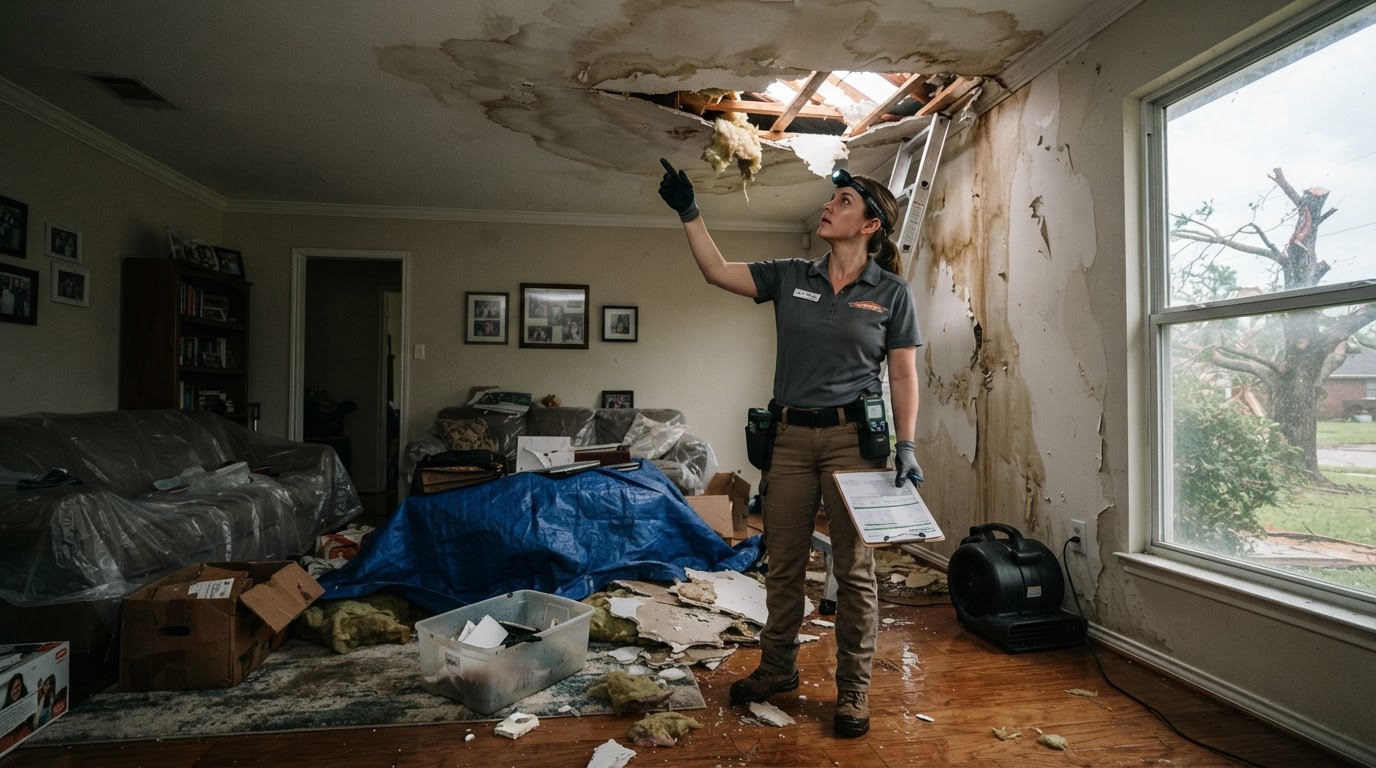
Storm damage restoration is the process of assessing and addressing property damage caused by severe weather — wind-driven rain, damaged windows or doors, roof damage followed by water intrusion, fallen limbs or debris, and storm-related flooding. The work can include property assessment, water extraction, moisture detection, structural drying, debris cleanup, temporary board-up or tarping where appropriate, contents protection, damaged material removal, and repair preparation.
Storm restoration scope depends heavily on the type and extent of the damage. A wind-driven rain event that forces water through a damaged opening may require different work than a roof breach that allows water into an attic and ceiling, or a storm that introduces flooding at ground level. Each scenario is assessed on its own conditions.
Pro-Kleen Restoration provides storm damage restoration for properties in Seneca and surrounding communities such as Walhalla, Westminster, Clemson, and Anderson. We assess the affected areas, stabilize exposed sections where appropriate, remove water, dry the structure, and prepare it for any needed repairs.
Water Intrusion
Wind-driven rain, roof leaks, and damaged openings allow water into attics, ceilings, walls, and floors — requiring extraction, moisture detection, and structural drying.
Structural Exposure
Damaged windows, doors, or roof sections may call for temporary board-up or tarping to help protect the property while restoration and repair are coordinated.
Contact Pro-Kleen Restoration
Speak directly with our Seneca, SC restoration team.
How Storms Can Damage Homes and Businesses
Storms affect properties in several ways. Some damage is immediately visible; other damage develops as water migrates into hidden assemblies after the weather has passed. Understanding the type of damage helps determine the appropriate restoration approach.
Wind-Driven Rain
Strong winds can force rain through building envelopes, around windows and doors, and into wall cavities even without obvious structural damage.
Roof Damage & Water Intrusion
Damaged or displaced roofing allows water to enter attics, saturate insulation, and travel down into ceilings and walls.
Damaged Windows & Doors
Broken or compromised openings let wind and water into the interior, affecting drywall, flooring, and contents.
Fallen Limbs or Debris
Tree limbs and storm debris can impact roofs, siding, and openings, creating paths for water entry and requiring debris cleanup.
Ceiling & Attic Water
Water that enters through the roof can pool above ceilings, saturate insulation, and eventually breach drywall into living spaces.
Wall Water Damage
Wind-driven moisture can enter wall cavities through gaps and damaged siding, wetting drywall and insulation from the outside in.
Flooring Damage
Water that reaches interior floors can soak into hardwood, laminate, carpet, and subflooring, causing swelling and warping.
Crawl-Space Water
Storm runoff and poor drainage can introduce water into crawl spaces, affecting framing and the underside of flooring.
Localized Flooding
Heavy rainfall and drainage issues can cause water to enter at ground level, affecting multiple rooms and materials.
Signs of Hidden Storm Water Damage
What Happens During Storm Damage Restoration?
Storm restoration begins once immediate conditions are safe. The specific process depends on the type of damage, whether the building envelope is compromised, and how far water has migrated. The steps below describe a typical sequence, but not every project requires every step.
Wait Until Conditions Are Safe
Restoration work begins once the immediate weather event has passed and it is safe to access and assess the property.
Assess Openings and Affected Areas
We inspect damaged openings, roof sections, and interior areas to identify where water entered and how far it has traveled.
Stabilize Exposed Sections When Appropriate
Temporary board-up or tarping may be used to help protect damaged openings and limit further water entry while repairs are coordinated.
Remove Standing Water Where Necessary
Extraction equipment removes accessible water from floors, carpets, and low areas before drying can begin.
Identify Moisture Migration
Moisture meters and thermal imaging where appropriate map how far water has moved into walls, ceilings, attics, and cavities.
Remove Damaged Material When Required
Wet drywall, insulation, and finishes that cannot be appropriately dried are evaluated for removal to allow access for drying.
Dry and Dehumidify Affected Spaces
Air movers and dehumidifiers are positioned to evaporate trapped moisture and pull it out of the structure.
Clean, Protect Contents, and Prepare for Repair
Contents are protected or moved as needed, affected areas are cleaned, and the property is prepared for structural repairs or reconstruction.
Not every storm project needs board-up, tarping, extraction, or contents handling. Pro-Kleen Restoration scopes each loss to the actual conditions found during assessment and coordinates with the appropriate trade professionals where structural repair is outside the restoration scope.
Questions about your property in Seneca?
Call Pro-Kleen Restoration to discuss the damage and what may be needed.
Restoring a Property After Storm-Related Damage
Storm restoration often overlaps with several other restoration services. Water that entered through a damaged roof may require the same moisture detection and structural drying as a plumbing loss. Ground-level flooding may call for the same approach as flood damage cleanup. Contents exposed to water or debris may need cleaning and pack-out. And moisture left behind can create conditions favorable to mold growth if not dried thoroughly.
Roof repair itself may require the appropriate trade professional depending on the scope, while Pro-Kleen Restoration addresses the restoration services offered — water removal, drying, contents handling, and repair preparation. We coordinate with property owners and managers so the restoration and repair work fit together rather than leaving gaps.
Pro-Kleen Restoration works with residential homeowners, landlords, property management companies, and commercial property operators across Seneca and surrounding Upstate South Carolina communities. Whether the loss is a single damaged opening or a larger storm event affecting multiple areas, the goal is to stabilize the property, dry it thoroughly, and prepare it for repair.
Areas & Materials Commonly Affected
Storm Damage Restoration FAQs
Need Storm Damage Restoration in Seneca?
Contact Pro-Kleen Restoration to discuss your property and the storm damage restoration work that may be needed. Call (864) 870-7167 or submit a service request and our Seneca team will follow up with you.